

What is Mazzucchelli 1849 acetate?
The Italian cellulose material every great house quietly relies on — and why nobody else has caught up in 175 years.
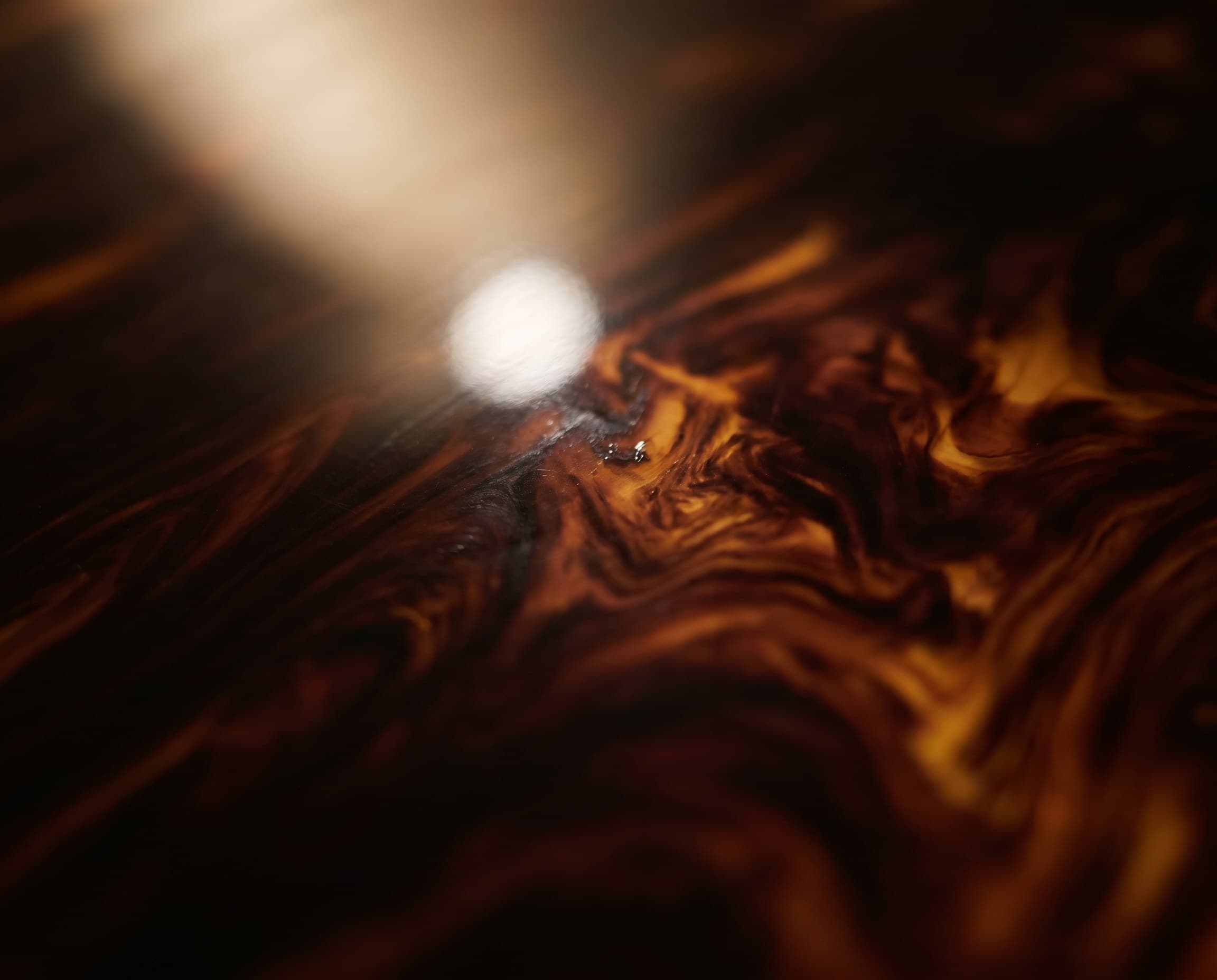
A material that pre-dates plastic
When you handle an eyewear frame and it has weight, depth, and a colour that seems to come from somewhere behind the surface rather than painted onto it — there is a high probability the acetate came from a single Italian town, Castiglione Olona, where a family company called Mazzucchelli 1849 has been pouring cellulose acetate sheets since the year their name advertises.
For context: 1849 is two decades before the United States bought Alaska. Mazzucchelli was making moulded cellulose objects — combs, hair ornaments, billiard balls — before plastic existed as we understand it. When the world transitioned to petroleum-derived polymers in the 1950s, Mazzucchelli kept making cellulose. They never stopped. And they kept refining the recipe.
That continuity is the whole story.
What acetate actually is
Cellulose acetate is a thermoplastic made from purified cotton fibre and wood pulp, mixed with plasticisers and pigments, then cast as thick sheets over a process that takes weeks. The block of acetate that becomes one of our frames spends two to three months in a temperature-controlled cure before it is ever cut. The pigments are not painted on — they are poured in. When you polish the surface, you are exposing the colour that has lived inside the block all along.
This is why a vintage tortoise frame can be sanded down 30 years later and still look the same. The colour is the material.
Why Mazzucchelli's is different
We have used acetate from three suppliers across two decades. Mazzucchelli's blocks have the following observable advantages over the others:
- Density. The block is heavier than equivalent thickness from competitors. Cuts cleaner. Holds detail at the rivet sites and hinge cavities.
- Pigment depth. Tortoiseshell from Mazzucchelli has actual stratigraphy — layers of amber, umber, and crystalline gold that you can read when light enters the temple. Generic acetate looks like a printed pattern. Mazzucchelli's looks like a stone.
- Tumble behaviour. After hand-cutting, every Soletti frame is tumbled for 72 hours in a wooden drum with sawdust and pumice. Mazzucchelli's blocks develop a soft, slightly mottled polish under this treatment that we cannot replicate with any other supplier.
- Tolerance over heat. Acetate yields slightly when warm — that's how an optician adjusts your frame fit. Mazzucchelli's acetate yields gracefully. The cheaper ones either don't yield at all or yield and then crack.
How we use it
Every Maison Soletti frame is cut from a single Mazzucchelli 1849 block. Each frame outline is laid on the block by hand, taking into account the colour gradient inside the cellulose so the tortoiseshell or the cognac swirl lands on the brow line, not the temple.
You can see the discipline in the Soletti Mozart — its espresso-tinted lens sits inside a frame whose acetate was selected specifically so the amber tone at the inner corner of the rim catches the morning light.
The cut is rough. The frame then goes through 14 stages of sanding, bevelling, riveting, and tumbling. Total time from raw block to ready-to-ship frame: between 18 and 22 days, depending on the model. None of this is fast. None of it is automated.
Why it matters for the buyer
When you put on a frame whose acetate began at Mazzucchelli, you are wearing a material that has been engineered to age. The first six months it will mould slightly to your nose bridge. The polish will soften. The colour, paradoxically, will deepen — cellulose acetate becomes more saturated with handling because microscopic surface scratches scatter less light over time.
This is the opposite of how most things people wear today behave. Most things degrade. A Mazzucchelli acetate frame, treated reasonably, gets more handsome.
It is also the reason we will not switch suppliers. Not for cost, not for lead time, not for fashion.
Want to feel the difference?
Every Soletti frame in our Frames collection is Mazzucchelli 1849. The Cain shows the tortoise stratigraphy best; the Verdi the gun-metal acetate at its most architectural. Worth handling in person at one of our showrooms.
If you want to dig deeper on what we pair with these frames, read The Daytona × Verdi Pairing.